Furnace and heating repair costs in Phoenix: what changes the price
By Diego Ibrahim · Updated 2026-05-04
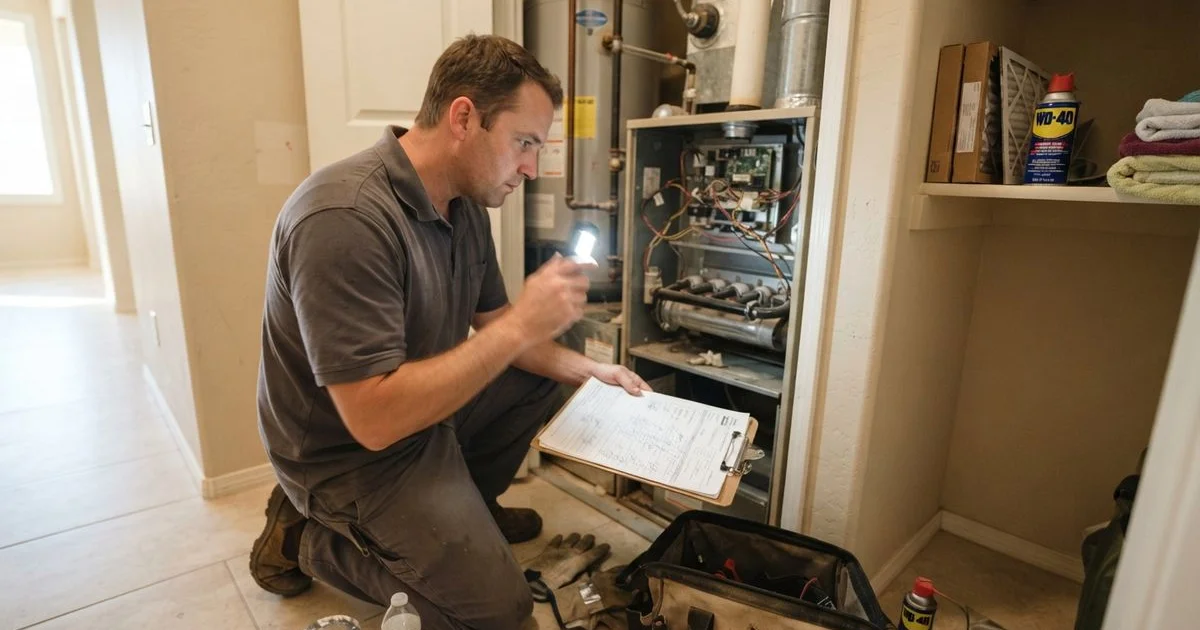
Heating is not the first thing most people think about with Phoenix HVAC, but furnaces and heat pumps still fail, and repair costs here follow their own logic shaped by how lightly the equipment actually gets used.
Why Phoenix heating costs look different
In colder states, a furnace runs for months at a stretch and wears down accordingly. In Phoenix, most systems only see real use from December through February, with mild nights the rest of the year needing little or no heat at all. That lighter duty cycle means furnaces here often outlast their rated lifespan, but it also means a failure can go unnoticed for a while, since a household might not need heat again for weeks after a cold snap passes.
What drives the repair price
The type of equipment matters first. A standard gas furnace repair, a heat pump repair, and a dual fuel system repair (a heat pump paired with a gas furnace backup) each involve different parts and diagnostic steps. Age is the second factor: an igniter or thermostat swap on a newer unit is straightforward, while an older furnace with a failing heat exchanger, one of the more serious and costly failures, may need a fuller inspection for safety before any repair proceeds. Third, accessibility matters. A furnace in an easy-to-reach closet costs less to service than one in a tight attic space, common in some Phoenix home layouts.
Typical price ranges
| Job | Typical cost range |
|---|---|
| Diagnostic visit | $75-110 |
| Igniter, thermostat, or capacitor repair | $150-400 |
| Blower motor replacement | $400-900 |
| Heat exchanger replacement | $1,000-2,200 |
| Full furnace replacement | $3,500-7,000 |
| Heat pump repair (compressor-related) | $800-2,000 |
These ranges reflect common Phoenix-area jobs; your exact price depends on brand, age, and what a technician finds during diagnosis. Cooling repairs follow a similar cost pattern but scale differently; see our HVAC repair and installation cost guide for how AC-side pricing compares.
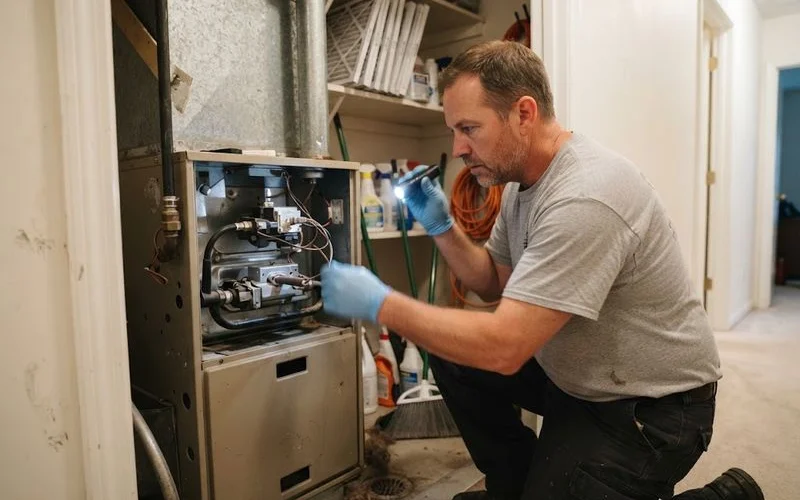
Gas furnace, heat pump, or dual fuel
Phoenix’s mild winters mean heat pumps make practical sense for a lot of homes here in a way they might not in colder climates: the same outdoor unit that provides summer cooling can reverse and provide winter heat, cutting down on separate equipment. A standalone gas furnace still makes sense for homes already piped for gas or where a household wants a heating source that does not rely on outdoor temperature efficiency curves. A dual fuel setup, a heat pump paired with a gas furnace backup, is less common here but appeals to homeowners who want efficiency most of the year with a fallback for rare cold snaps.
Repair or replace
Because Phoenix furnaces see lighter use, a unit at 15 years old here may still have real service life left in a way an equivalent unit in a colder state would not. The bigger red flag is a heat exchanger failure, which raises both a cost question and a safety one, since a cracked heat exchanger on a gas furnace can allow combustion byproducts to enter the home’s air supply. Any technician who identifies this issue should walk you through the finding directly rather than simply recommending replacement without explanation.
Maintenance still matters for heating
It is tempting to skip furnace maintenance entirely in a climate where the equipment barely runs, but a quick fall check still pays off. A technician can catch a failing igniter, a dirty flame sensor, or a blower motor showing early wear before the first cold night, rather than leaving you to discover it when you actually need heat. This is a shorter, cheaper visit than a full AC tune-up, and pairing it with your fall AC service (checking coils after monsoon dust settles) is an efficient way to handle both systems in one visit if your contractor offers combined seasonal service.
Getting a fair quote
Ask for the specific part that failed and why it failed, not just a total price. For anything beyond a basic repair, a second opinion is worth the extra diagnostic fee, especially on an older system where replacement is being suggested. Our directory lists local heating and furnace contractors by review consistency and response history, and our ranking methodology explains how those scores get calculated.
Common questions
- Why do Phoenix homes even need a furnace?
- Winter nights in the Phoenix area can drop into the 40s, and occasional cold snaps go lower. Most homes run a furnace or heat pump for a few months a year rather than continuously, which is part of why heating equipment here tends to outlast the same equipment in colder states.
- How much does a basic furnace repair cost in Phoenix?
- Simple fixes like an igniter, thermostat, or blower motor capacitor typically run $150-400. Heat exchanger or blower motor replacement runs higher, often $500-1,500 depending on the part and system age.
- Is a heat pump cheaper to run than a gas furnace in Phoenix?
- For Phoenix's mild winters, a heat pump is often the more efficient choice since it moves heat rather than generating it, and many homes already have a heat pump doing double duty for both heating and cooling.
- When does furnace replacement make more sense than repair?
- If the unit is past 15-18 years old (furnaces tend to outlast their rated life here given lighter use), or if it needs a heat exchanger replacement, a full swap often makes more financial sense than repairing a unit near the end of its life.