Helping an aging parent or senior with HVAC problems in Phoenix heat
By Diego Ibrahim · Updated 2026-06-16
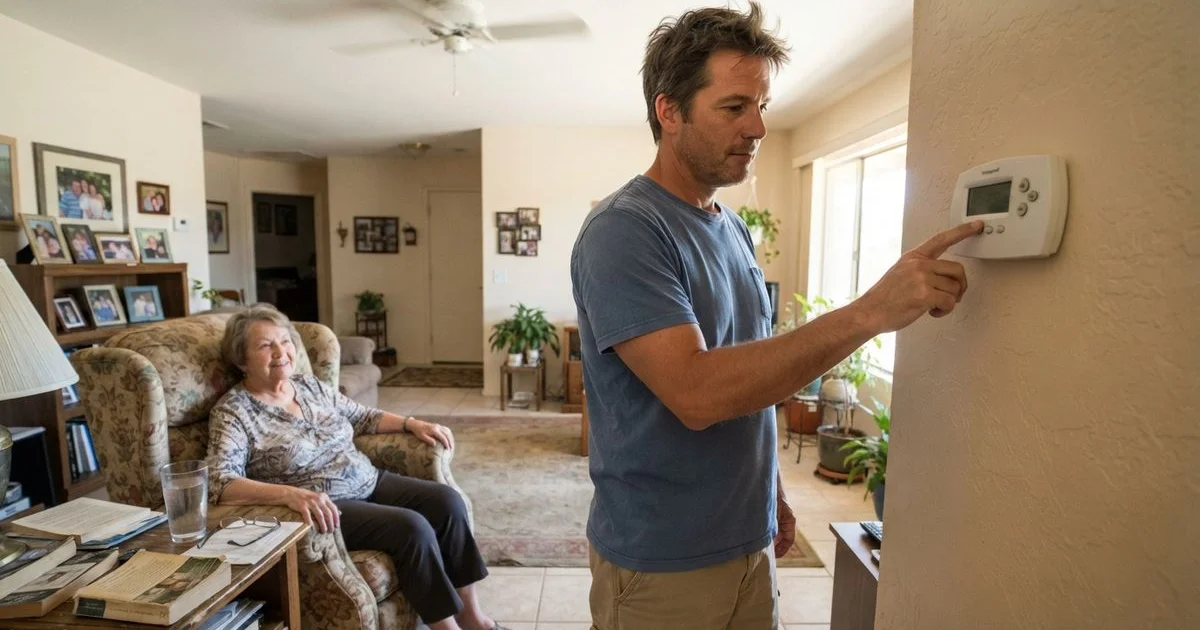
Caring for an aging parent from a distance, or even just down the street, gets harder in a Phoenix summer. AC failure is not a minor household glitch when the person affected is older and less able to sense or respond to rising heat.
Why this deserves extra attention
The body’s ability to regulate temperature changes with age, and many common medications, including some blood pressure drugs and diuretics, can further reduce the body’s ability to cool itself. This combination means an older adult can be in real danger from a hot home well before they personally feel like something is seriously wrong. Cognitive changes can also make it harder for someone to recognize or communicate that their home has become unsafely hot.
Signs worth watching for
If you visit or check in regularly, a few signs are worth paying attention to: a parent mentioning the AC “isn’t keeping up” the way it used to, noticeably higher utility bills without an obvious cause, a system that runs almost constantly, or a home that feels warmer than it should on a normal setting. Any of these can signal a system nearing failure rather than something to wait out.
A proactive check beats an emergency call
Rather than waiting for a full breakdown, consider scheduling a system check well before peak summer, especially if the unit is past the 10 to 12 year mark common for Phoenix systems, or if it has needed more than one repair in the past year. Framing this as routine maintenance, rather than a response to a suspected problem, often goes over better with a parent who may be reluctant to admit something is wrong or worried about the cost of finding out.
| Situation | Suggested response |
|---|---|
| System is 10+ years old, no recent issues | Schedule a proactive tune-up before summer |
| Recent repair history (2+ calls in a year) | Get a full system evaluation, consider replacement timeline |
| Parent mentions the home “feels warm” | Take it seriously, check in person if possible |
| Confusion or resistance to reporting problems | Offer to be present for technician visits |
Being there for the technician visit
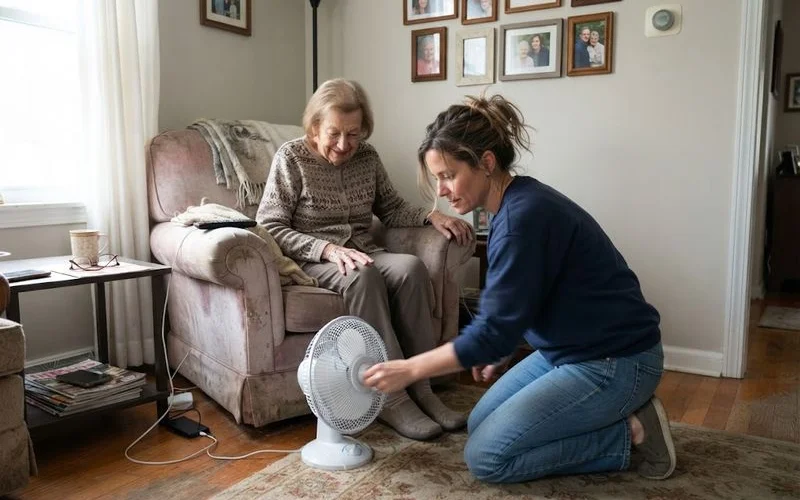
If you can be present, in person or by phone, for a repair or tune-up visit, it helps in two ways: you can ask the technical questions your parent might not think to ask, and you get a direct explanation of the system’s condition rather than a secondhand account. Ask specifically about the system’s remaining expected lifespan and whether any parts are showing early signs of wear, so you are not caught off guard by a bigger failure later.
Setting up a check-in habit
If your parent lives independently and you cannot visit often, a regular phone check-in during summer months that specifically asks about the house temperature, not just how they are feeling generally, can catch a problem earlier. Some families set a simple rule: if the indoor temperature climbs above a certain point and cannot be brought down quickly, call immediately rather than waiting to mention it during the next regular check-in. A smart thermostat that lets you check the temperature remotely, if your parent is comfortable with the technology, can make this easier without needing to ask every time.
Finding financial help if needed
Cost is often the real reason a parent delays addressing a struggling system. Utility companies serving the Phoenix area frequently run crisis and weatherization assistance programs for qualifying households, and the federal Low Income Home Energy Assistance Program (LIHEAP) can help with both energy bills and, in some cases, equipment costs. Local Area Agencies on Aging are a good starting point for referrals to these programs, and some nonprofit organizations in the Phoenix area specifically fund AC repair or replacement for seniors during summer months. Our guide to free and low-cost AC repair help in Phoenix walks through these programs in more detail.
Building a plan before the next heat wave
The best time to sort out a parent’s HVAC reliability is before the first heat wave, not during one. Know who you would call for an emergency repair, keep the system’s age and repair history somewhere accessible, and have a backup plan (a cooling center, a relative’s home, a portable AC unit) in case a repair cannot happen same-day.
Our directory lists local contractors by response speed and review history, and our ranking methodology explains how those scores are built, so the groundwork is done before you need it.
Common questions
- Why are older adults more at risk when AC fails?
- The body's ability to regulate temperature and sense rising heat changes with age, and many common medications can interfere with that process further. This means an older adult can be in real danger from heat before they feel like something is wrong.
- How can I tell if my parent's AC is at risk of failing soon?
- Ask about the system's age, whether it has needed repairs recently, and whether it seems to run longer than it used to. A system past 10-12 years old, or one that has needed more than one repair in the last year, is worth a proactive check rather than waiting for it to fail.
- Is there financial help available for seniors needing AC repair in Phoenix?
- Utility-run assistance programs and federal programs like the Low Income Home Energy Assistance Program (LIHEAP) can help with both energy bills and, in some cases, equipment repair or replacement for qualifying households. Local Area Agencies on Aging are a good starting point for referrals.
- What if my parent is reluctant to admit their AC isn't working well?
- This is common. Try framing a check as routine maintenance rather than a response to a problem, or offer to be there for the technician visit yourself so your parent does not have to manage it alone.