What to expect from a commercial HVAC service call in Phoenix
By Diego Ibrahim · Updated 2026-06-09
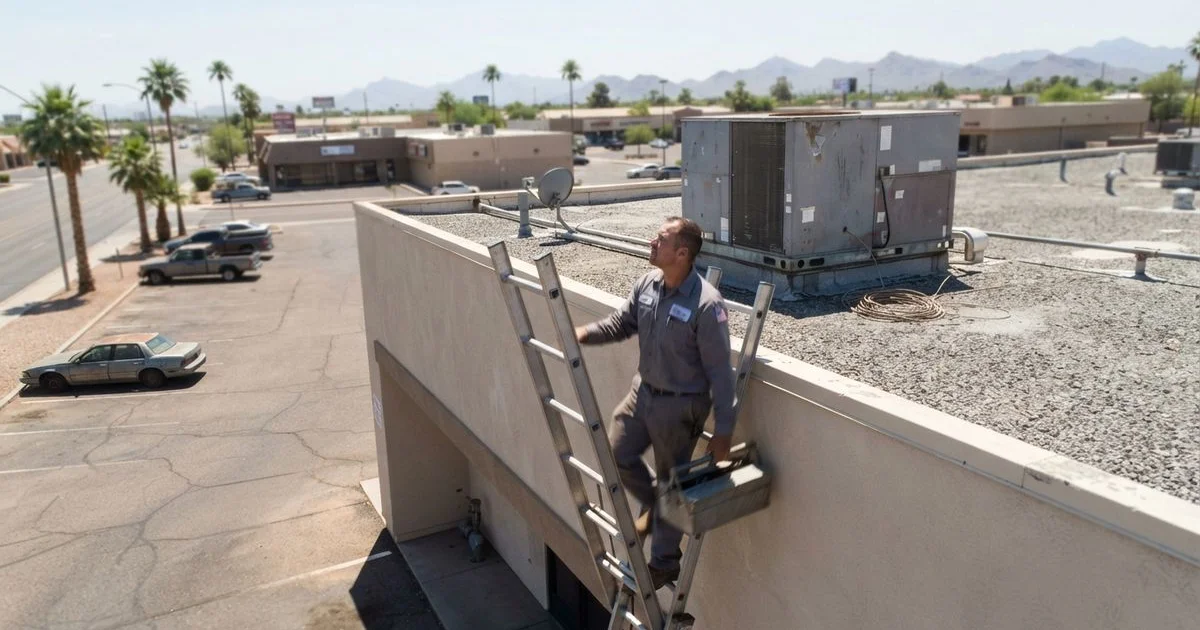
Commercial HVAC work in Phoenix carries different stakes than a residential call. A rooftop unit failure at a restaurant or retail store is not just uncomfortable, it can shut down operations. Knowing what a proper service visit looks like helps you evaluate whether a contractor is doing the job right.
Before the technician arrives
A well-run commercial visit starts with scheduling that accounts for your business hours. Ask whether the contractor can work before opening, after closing, or during a slower period to minimize disruption, especially for anything beyond a quick inspection. Confirm what access they need, roof access for rooftop package units, electrical room access, or building management coordination, and have that arranged ahead of time so the visit is not delayed on-site.
What a thorough visit covers
- System walkthrough. The technician reviews all HVAC equipment serving the space: rooftop units, chillers, split systems, and the ductwork and controls connecting them.
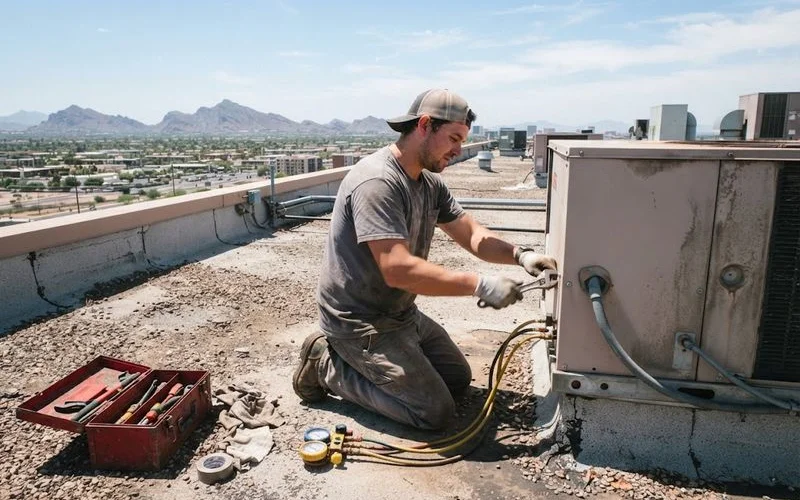
- Refrigerant and mechanical check. Refrigerant levels, compressor operation, and belt and electrical connection condition get tested against manufacturer specs.
- Filter and coil service. Filters get replaced or cleaned, and coils are inspected for the dust buildup common in Phoenix’s dry climate, which reduces efficiency if left unaddressed.
- Controls and automation testing. For buildings with building automation systems or programmable thermostats, the technician confirms schedules and setpoints are functioning as intended.
- Condensate and drainage check. Clogged condensate lines are a common cause of water damage in commercial spaces and get checked as part of a thorough visit.
- Written report. You should receive a summary of what was found, including any parts nearing failure, so you can budget for repairs before they become emergencies.
The mechanics of a thorough cleaning mirror what happens in a duct cleaning visit; see our duct cleaning walkthrough for the residential version, step by step.
| Visit component | What it prevents |
|---|---|
| Refrigerant check | Reduced cooling capacity, compressor strain |
| Coil cleaning | Efficiency loss, higher energy bills |
| Electrical component testing | Mid-summer component failure |
| Condensate drain clearing | Water damage, mold |
| Controls testing | Wasted energy, inconsistent comfort |
Rooftop units versus split systems
Not all commercial buildings run the same type of equipment, and it changes what a visit looks like. Rooftop package units, common on retail strip malls and single-story commercial buildings across Phoenix, mean the technician needs roof access and often specialized lift equipment for anything beyond a routine check. Buildings with split systems or multiple smaller zones, more typical of offices with individual room control, involve a different kind of visit, more time moving between units, less time on any single piece of equipment. Ask which setup your building has and confirm the contractor has direct experience with it before scheduling, since a company used to one system type can underestimate the time and access needs of the other.
How often commercial systems need service
Most contractors recommend at least two visits a year for Phoenix commercial systems, one in spring before cooling season ramps up and one in fall to check heating components and clear coils after monsoon dust settles. Buildings running cooling nearly year-round, which describes a lot of Phoenix retail, office, and restaurant space, often benefit from quarterly visits instead of the twice-yearly minimum.
Questions worth asking before signing a service contract
Ask how the contractor prioritizes emergency calls for existing service contract customers versus new callers, since a down rooftop unit during business hours is a revenue problem as much as a comfort one. Confirm whether the contract includes priority scheduling, discounted repair rates, or both. Ask about experience with your specific equipment brand and type, since rooftop package units, chillers, and split systems each require different expertise. Finally, confirm response time commitments in writing rather than relying on a verbal promise.
Judging the contractor beyond the invoice
Star ratings alone do not tell you much about commercial HVAC quality. Look for evidence in reviews of correct first-time diagnosis, fair pricing without surprise add-ons, and follow-through if an issue recurs. Ask for references from buildings similar in size and equipment type to yours.
Our directory lists commercial HVAC contractors in Phoenix by review consistency and response history, and our ranking methodology explains exactly how those scores are built.
Common questions
- How is a commercial HVAC visit different from a residential one?
- Commercial systems are often larger and more complex, rooftop package units, chillers, or multi-zone setups, and a visit usually involves building access coordination, sometimes roof access, and consideration for business operations during the visit.
- How often should a commercial building get HVAC service in Phoenix?
- Most contractors recommend at least two visits a year, one before cooling season ramps up and one in fall. Buildings that run cooling nearly year-round, common for retail and office space in Phoenix, often benefit from quarterly checks instead.
- What should be in a written report after a commercial visit?
- A clear list of what was inspected, any parts nearing failure with a rough cost estimate, refrigerant levels if checked, and a summary of overall system condition. This lets you budget for repairs rather than getting hit with a surprise breakdown.
- Do commercial HVAC contractors need a different license than residential ones?
- Arizona uses separate contractor classifications for commercial versus residential HVAC work. Confirm a contractor's license classification covers commercial work before hiring for a business property.