What actually happens during a duct cleaning in Phoenix
By Diego Ibrahim · Updated 2026-04-27
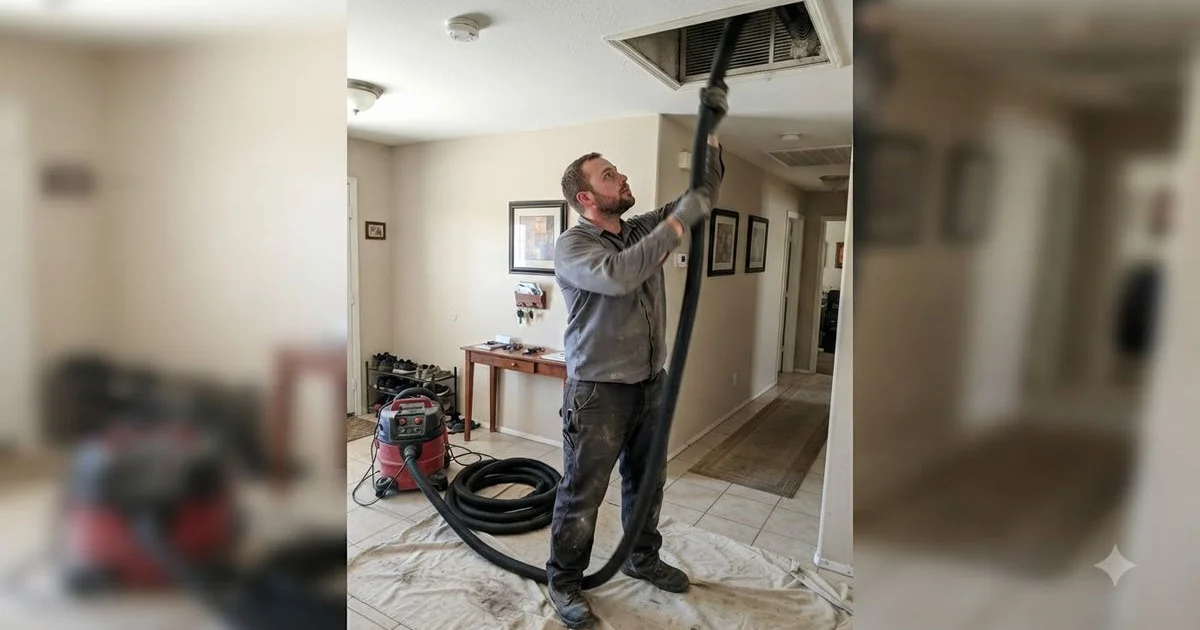
Duct cleaning gets sold in a lot of different ways, and it is easy to end up either skeptical of the whole service or unsure what you are actually paying for. Here is what a real visit looks like, step by step.
Before the crew arrives
A legitimate duct cleaning company inspects before it cleans. Expect a technician to walk the system first, checking supply and return vents, the air handler, and accessible duct runs for visible dust buildup, pest activity, or mold. This inspection is also when a contractor should give you a real number, not just a phone estimate, since the price depends on vent count, number of systems, and whether any sanitizing is needed for contamination.
The cleaning process, step by step
- Sealing and setup. Vents are covered with plastic or foam, and a powerful vacuum unit is connected to the ductwork, usually staged outside or in a garage to keep noise and dust out of living spaces.
- Creating negative pressure. The vacuum pulls air through the system so loosened debris moves toward the collection unit instead of into your home.
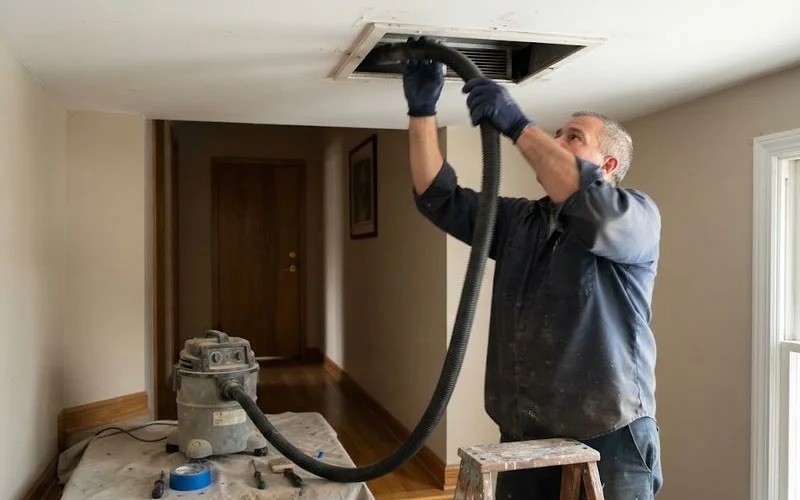
- Agitation. Technicians use brushes, air whips, or compressed air tools to dislodge dust and debris stuck to duct walls, working vent by vent.
- Cleaning the air handler and coil. The blower compartment and evaporator coil often collect more buildup than the ductwork itself, especially in older systems, and get cleaned as part of a thorough visit.
- Sanitizing, if needed. If mold or rodent contamination is present, an antimicrobial treatment is applied after cleaning, not instead of it.
- Final walkthrough. Vents are uncovered, and a technician should show you before-and-after evidence, whether that is photos or the visible collection canister, along with any recommendations if problems were found in the ductwork itself.
| Step | What it involves | Typical time |
|---|---|---|
| Inspection | Visual check of vents, air handler, accessible ducts | 15-30 min |
| Setup | Sealing vents, connecting vacuum equipment | 20-30 min |
| Cleaning | Agitation and vacuum extraction, vent by vent | 1-2 hours |
| Coil and handler | Cleaning blower compartment and coil | 20-40 min |
| Sanitizing (if needed) | Antimicrobial treatment for mold or pests | 30-60 min |
When it is genuinely worth doing
Duct cleaning earns its cost when there is a real problem to solve: visible dust blowing from registers, a musty odor when the system runs, evidence of rodents or pests in the ductwork, mold growth after a water leak, or a recent renovation that left construction dust in the system. Phoenix’s dry, dusty air and monsoon dust storms mean ducts can accumulate debris faster than in milder, wetter climates, which is part of why the service comes up more here than in some other regions.
When it is more of a judgment call
If there are no visible symptoms and no one in the household has new or worsening allergy or respiratory issues, duct cleaning is a maintenance choice rather than a necessity. Marketing claims that frame it as required on a fixed annual schedule are not well supported. A better trigger than a calendar date is a specific symptom: dust, smell, contamination, or a change in how the system performs. If allergy symptoms or a musty smell persist even after a cleaning, the cause is often something a cleaning alone does not fix; our indoor air quality solutions guide covers the filtration and purification options worth adding on top.
DIY steps versus what needs a professional
A homeowner can reasonably handle a few things without hiring anyone: vacuuming visible dust from vent covers and grilles, wiping down accessible register faces, and changing the air filter on a regular schedule. What a homeowner cannot safely do is reach into the ductwork itself. The runs are often long, awkward to access, and cleaning them properly requires negative-pressure vacuum equipment that pulls debris out rather than just pushing it further into the system, which is what happens with a household vacuum and a length of hose. Attempting a full duct cleaning without the right equipment tends to move dust around rather than remove it.
What a fair quote looks like
A reasonable quote breaks down cost by vent count and system count, states clearly whether sanitizing is included or extra, and does not pressure you into add-on services during the visit itself, such as duct sealing or replacement, without a specific finding to justify it. If a technician recommends duct sealing or repair, ask to see the specific damage before agreeing to extra work.
Our directory lists duct cleaning providers by review consistency and response history in the duct cleaning and repair category, and our ranking methodology explains exactly how those scores are calculated.
Common questions
- How long does duct cleaning take?
- Most single-system homes take 2-4 hours. A second system, heavy contamination, or hard-to-reach ductwork can push a job into a full day.
- Does duct cleaning actually make a difference in Phoenix?
- It helps most when there are visible signs of contamination: dust blowing from vents, a musty smell, or a recent pest or water issue. For a clean system with no symptoms, it is a maintenance choice rather than a necessity.
- Do I need to leave the house during duct cleaning?
- No, but expect some noise from the vacuum equipment and brief negative air pressure while each vent is cleaned. Most homeowners work from another room during the visit.
- How often should ducts be cleaned in Phoenix?
- There is no fixed schedule that fits every home. Dusty desert air, recent renovation work, pets, or visible mold are reasons to consider it sooner; a clean system with no symptoms can often go many years between cleanings.