Dust, mold and indoor air quality problems in Phoenix homes
By Diego Ibrahim · Updated 2026-06-30
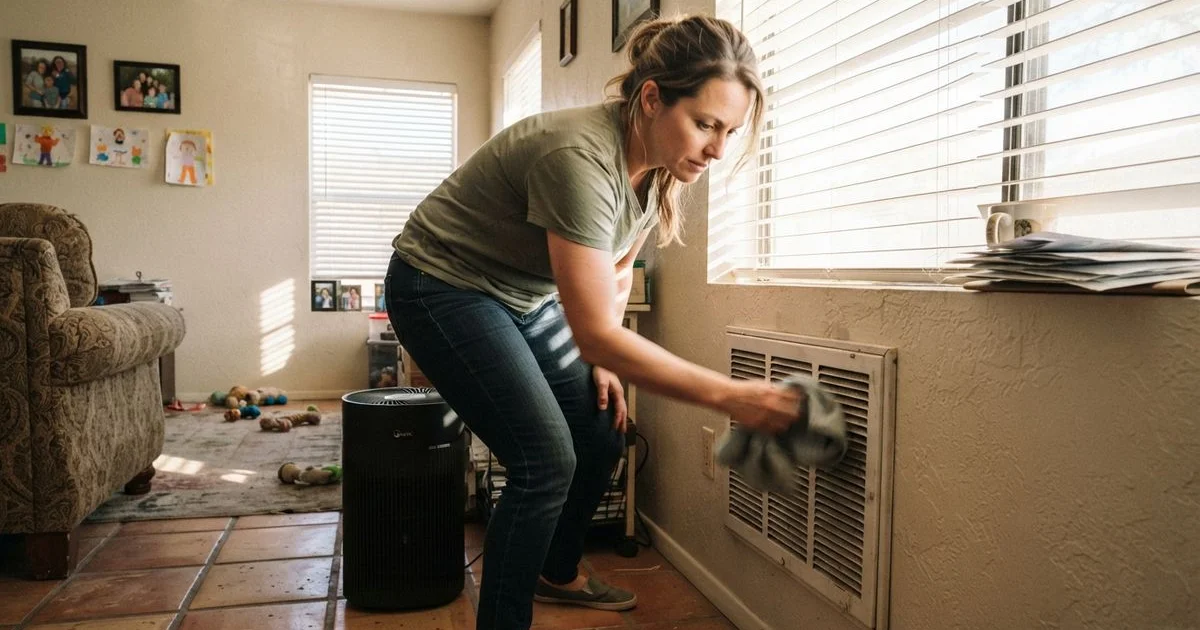
Phoenix’s air quality challenges do not look like what most of the country deals with. Desert dust and monsoon humidity swings create their own specific set of problems, and knowing what is normal versus what needs attention makes a real difference.
Why Phoenix is different
Most indoor air quality guidance assumes a humid climate where mold is the dominant concern. Phoenix flips that: dust and fine particulates from the surrounding desert are the more constant issue, blowing in through open doors, settling on surfaces, and working into HVAC systems over time. Monsoon season adds a second, different challenge: sudden humidity spikes and dust storms (haboobs) that can push large amounts of debris into a home’s air intake in a short period.
Dust: the everyday problem
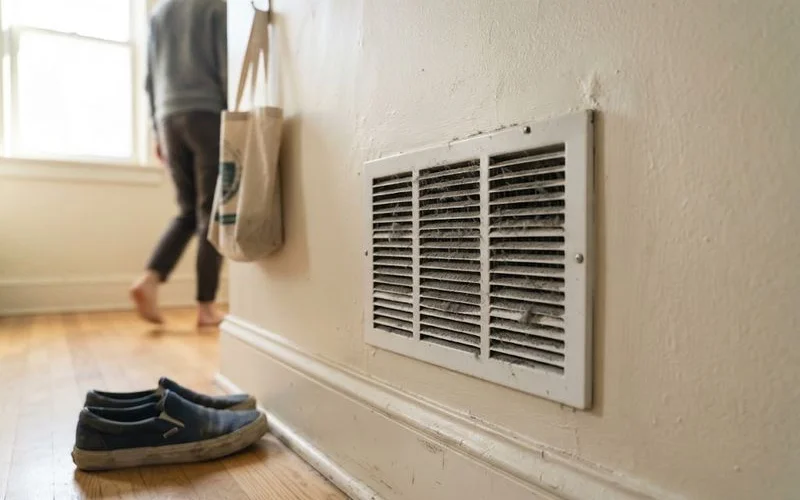
Dust accumulation in ductwork and on HVAC components is common in the Phoenix area simply because of the surrounding environment. For most healthy adults, ordinary household dust is more of a nuisance than a health risk. For people with allergies, asthma, or other respiratory sensitivities, though, accumulated duct dust can be a real trigger, since it circulates through the home every time the system runs. Signs worth noticing include visible dust blowing from vents shortly after cleaning, a heavier-than-usual dust layer on furniture that returns quickly, or a household member’s allergy symptoms that seem worse indoors than outdoors.
Mold: less common but not rare
Mold needs moisture, and Phoenix’s dry climate limits it more than humid regions, but it is not impossible. The most common sources here are condensation around AC components (especially if a system is oversized and short-cycling, which creates more condensation than a properly sized system), a slow leak in ductwork or around a window, or the sudden humidity that arrives with monsoon storms. A musty odor, particularly one that intensifies near a vent or air handler, is a signal worth investigating rather than ignoring.
| Sign | Likely cause | What to do |
|---|---|---|
| Dust blowing from vents | Ductwork buildup | Consider duct cleaning |
| Worsening allergy symptoms indoors | Accumulated dust, poor filtration | Upgrade filter, consider duct cleaning |
| Musty smell near vents | Possible mold or moisture issue | Professional inspection |
| Visible discoloration on vents or ceiling | Likely mold | Professional inspection and remediation |
| Sudden humidity spike after monsoon | Normal seasonal shift, monitor | Watch for follow-on moisture issues |
When to call a professional versus handle it yourself
Small, visible surface dust on vent covers or grilles is reasonable to clean yourself with a vacuum attachment or damp cloth. Dust that has clearly built up inside ductwork, evidenced by consistent dust blowing from registers even after wiping down covers, is a job for professional duct cleaning rather than a DIY fix, since reaching inside ductwork properly requires specialized equipment. Any visible mold, discoloration, or a musty smell that does not resolve after basic cleaning warrants a professional inspection. Handling suspected mold in ductwork yourself risks spreading spores through the system rather than removing them.
Allergy symptoms: indoor or outdoor trigger
One useful diagnostic question is whether symptoms track with time spent indoors or outdoors. If allergy or respiratory symptoms are consistently worse at home than elsewhere, that points toward an indoor air quality issue, dust, a specific allergen in the ductwork, or possibly mold, rather than Phoenix’s general outdoor pollen and dust levels, which affect everyone regardless of indoor conditions. Keeping a rough log of when symptoms flare, and whether it correlates with being home, cleaning, or running the AC, gives a technician useful information if you do end up calling one.
Reducing the problem going forward
A properly sized AC system (neither oversized nor undersized) reduces the short-cycling that contributes to excess condensation and mold risk, while a good filter, matched to your system’s airflow capacity and changed on a schedule suited to Phoenix’s dustier conditions, reduces how much particulate gets into the ductwork in the first place. For monsoon season specifically, keeping windows and doors closed during dust storms and checking your system’s outdoor components afterward for debris buildup helps limit what makes it into the system. For a deeper look at filtration and purification options that address these issues directly, see our indoor air quality solutions guide.
Our directory lists indoor air quality specialists in Phoenix by review consistency and response history, and our ranking methodology explains exactly how those scores are calculated.
Common questions
- Can dust in ductwork actually affect health?
- Yes, for sensitive individuals. Accumulated dust can circulate fine particulates that trigger or worsen allergy and asthma symptoms. It is generally not dangerous for a healthy adult in small amounts, but it is a real irritant for people with respiratory sensitivities.
- Does mold grow in Phoenix's dry climate?
- It is less common than in humid regions but not impossible. Monsoon season brings sudden humidity spikes, and condensation around AC components or a slow leak can create the moisture mold needs, even in an otherwise dry environment.
- How do I know if a musty smell means mold?
- A persistent musty odor, especially near vents or after monsoon rain, is worth investigating. Visible discoloration on vents, ceiling tiles, or around the air handler is a stronger sign than smell alone and warrants a professional inspection.
- Can I clean visible mold myself?
- Small surface mold on a hard, non-porous surface can sometimes be cleaned with standard household products, but mold inside ductwork or on HVAC components needs a professional, since improper handling can spread spores through the system.