Monsoon season and your HVAC system: what Phoenix homeowners should know
By Diego Ibrahim · Updated 2026-07-28
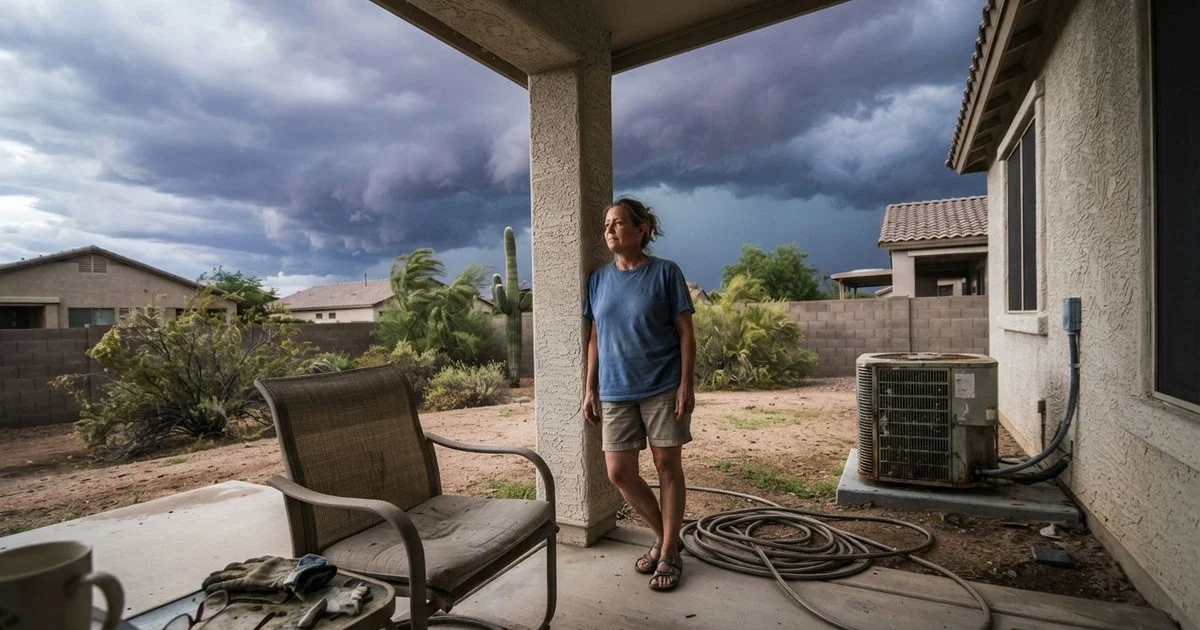
Monsoon season brings a different kind of stress to a Phoenix HVAC system than the dry summer heat that precedes it. Dust storms, sudden humidity, and occasional power interruptions each affect equipment in their own way.
Dust storms and your outdoor unit
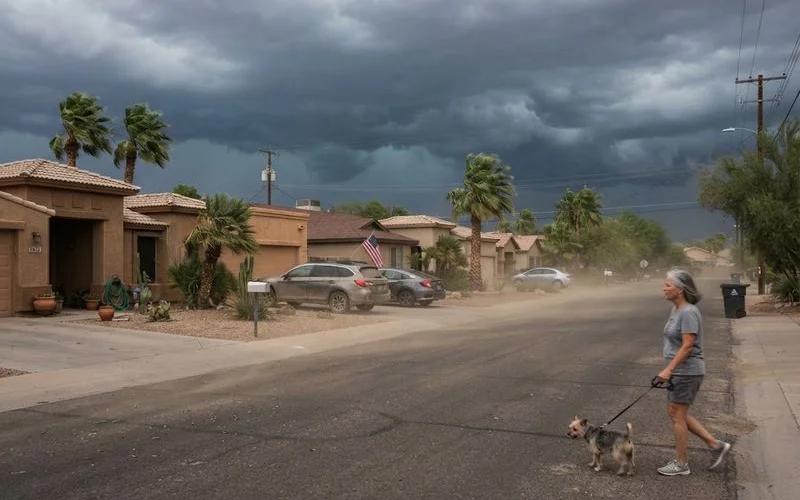
A haboob can move a significant amount of dust and debris across a wide area in a short time, and much of it settles directly on and around an outdoor condenser unit. This does not usually cause immediate failure, but accumulated dust on the coil fins acts like insulation, forcing the system to work harder and reducing efficiency. After a significant dust storm, a quick visual check, and clearing any debris within about two feet of the unit, helps prevent that buildup from becoming a bigger issue.
Humidity spikes and system performance
Phoenix HVAC systems are generally sized and set up for the region’s typically dry heat, where the main job is straightforward cooling. Monsoon humidity changes that equation somewhat, since removing moisture from the air is a different load on the system than cooling dry air alone. You may notice a system that seems to run longer or the home feeling slightly less comfortable at the same thermostat setting during a humid stretch, even if nothing is actually wrong with the equipment.
Power interruptions and surges
Monsoon storms bring a real risk of power flickers, outages, and surges, any of which can affect sensitive HVAC electronics, particularly the control board. A dedicated surge protector installed at the outdoor unit is a more reliable safeguard than manually switching the system off during every storm, though shutting it off during active lightning in your immediate area is a reasonable precaution if you are home and notice it.
| Monsoon risk | Effect on HVAC system | What helps |
|---|---|---|
| Dust storm (haboob) | Debris buildup on outdoor unit | Post-storm visual check and clearing |
| Sudden humidity spike | Reduced comfort at same setting, longer run times | Awareness; usually resolves as humidity passes |
| Power surge | Risk to control board and electronics | Surge protector at outdoor unit |
| Heavy rain | Water pooling near outdoor unit | Confirm unit is on a stable, raised pad |
A simple post-storm checklist
After a significant monsoon event, a short check catches most issues before they grow. Look at the outdoor unit for visible debris or dust accumulation and clear anything obstructing airflow. Confirm the unit has not shifted or tilted from wind, especially units on gravel or unstable pads. Once the storm passes, run the system and listen for any new or unusual noise, and note whether it seems to be cooling normally. If anything seems off, a quick call to a technician before the next storm arrives is worth it.
Landscaping and drainage around the unit
Monsoon rain arrives fast and heavy, and Phoenix’s soil does not always drain it well. Take a look at how water moves around your outdoor unit during a storm, if it tends to pool directly beneath or around the condenser, that standing water can eventually affect the unit’s base pad and electrical connections. Redirecting a downspout or regrading a small area of ground away from the unit is a simple fix that prevents a bigger problem from developing quietly over several monsoon seasons.
Getting ahead of the season
Scheduling a tune-up before monsoon season begins (typically mid-June in the Phoenix area) gives a technician the chance to check coil condition, tighten any loose electrical connections, and confirm the system is in good shape before storms start rolling through. This is a smaller investment than dealing with a failure mid-storm, when demand for service calls tends to spike right along with the weather.
Monsoon season in the Phoenix area typically runs mid-June through the end of September, roughly overlapping with the hottest stretch of summer, which means your system has no real break between the two stresses. Treating the pre-monsoon tune-up as part of your regular summer prep, rather than a separate task, keeps it from getting skipped.
Our directory lists local contractors by review consistency and response history, and our ranking methodology explains how those scores are calculated, useful whether you are scheduling routine prep or need a fast response after a storm.
Common questions
- Can a dust storm damage my outdoor AC unit?
- A haboob can push a large amount of dust and debris into and around an outdoor condenser in a short time. It rarely causes immediate failure, but accumulated debris restricts airflow and strains the system if not cleared afterward.
- Should I turn off my AC during a monsoon storm?
- If there is lightning nearby or a power surge risk, some homeowners choose to switch the system off at the thermostat as a precaution, though a surge protector on the outdoor unit is a more reliable safeguard than manually cycling the system.
- Why does humidity affect Phoenix AC systems during monsoon season?
- Systems designed and sized for Phoenix's typically dry heat can struggle a bit more with the sudden humidity monsoon storms bring, since removing moisture from the air is a different load than simply cooling dry air.
- What should I check on my system after a monsoon storm passes?
- Look at the outdoor unit for visible debris, dust, or leaning caused by wind, and listen for any unusual noise once the system runs again. A quick check after a significant storm can catch a problem before it becomes a bigger repair.