Getting your Phoenix home's AC ready for summer: a pre-season checklist
By Diego Ibrahim · Updated 2026-05-18
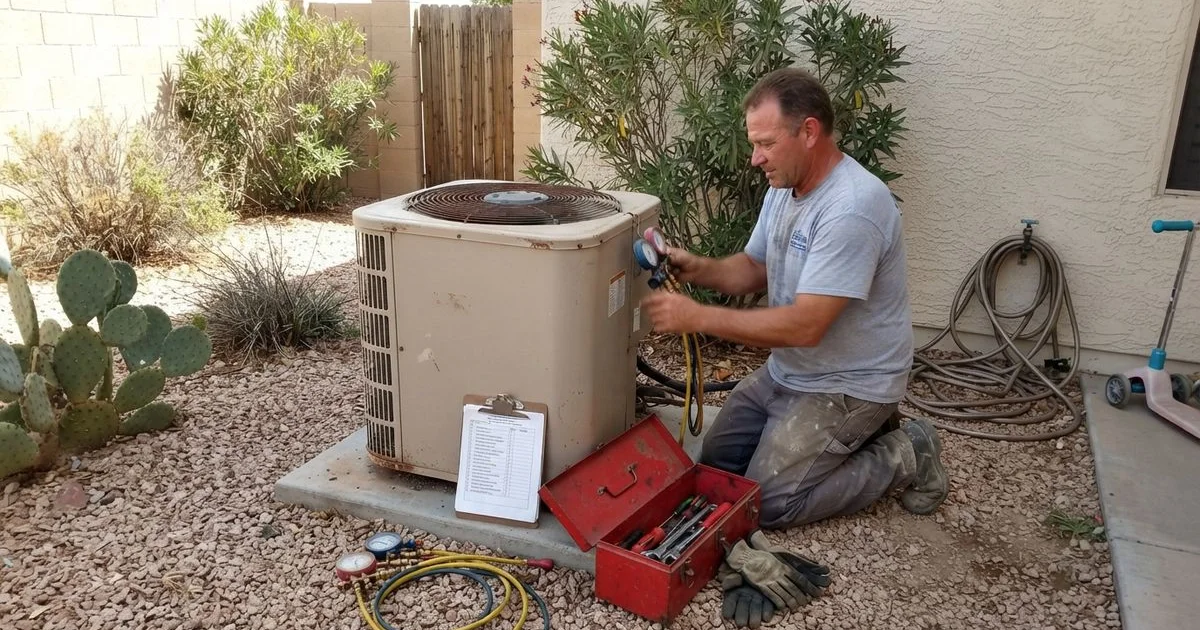
Phoenix summers do not give a struggling AC system much room for error. A pre-season check, done in spring rather than after the first 100-degree week, is the difference between a routine tune-up and an emergency call during peak demand.
Why timing matters
Once daytime highs push past 100°F, HVAC companies get busy fast, and both wait times and after-hours rates tend to climb along with demand. Scheduling a check in February, March, or April means more appointment flexibility, lower urgency pricing, and time to actually address anything a technician finds before the system has to run flat out.
What you can check yourself
Start with the basics before bringing in a professional.
- Replace the air filter. A clogged filter restricts airflow and makes the whole system work harder. If you cannot remember the last change, that is your answer.
- Clear the outdoor unit. Remove leaves, dust buildup, and any plants or debris within about two feet of the condenser so air can flow freely around it.
- Check indoor vents. Make sure furniture, rugs, or curtains are not blocking supply or return vents anywhere in the house.
- Test the thermostat. Confirm it responds correctly to temperature changes and replace batteries if it uses them.
- Listen for anything unusual. Grinding, squealing, or rattling noises from the system are worth mentioning to a technician even if the system is still cooling fine.
What a professional tune-up adds
A homeowner checklist covers the surface-level items, but several things genuinely need a licensed technician with the right tools.
| Task | Who handles it |
|---|---|
| Filter replacement | Homeowner |
| Clearing outdoor unit debris | Homeowner |
| Thermostat battery check | Homeowner |
| Refrigerant level check | Professional |
| Electrical component testing (capacitors, contactors) | Professional |
| Condensate drain clearing | Professional |
| Coil cleaning | Professional |
| Airflow and static pressure testing | Professional |
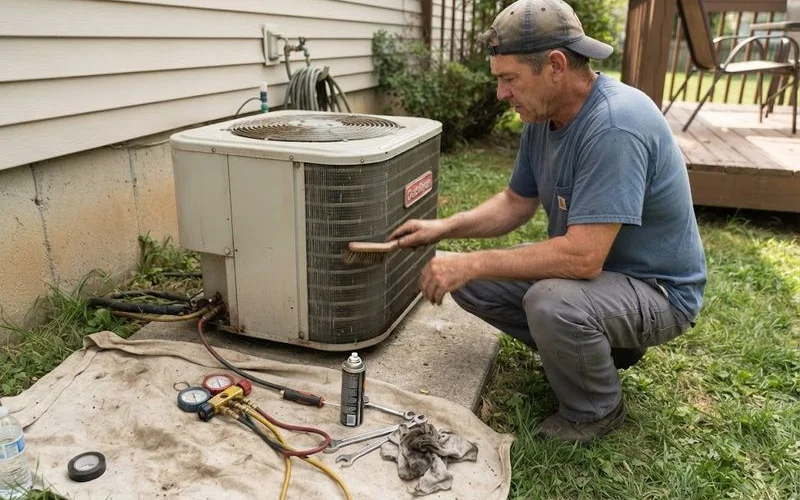
What a tune-up visit typically covers
A proper tune-up checks refrigerant charge against manufacturer specs, tests capacitors and contactors (common points of failure in Phoenix’s heat), inspects and cleans the condenser coil, clears the condensate drain line to prevent backups, and confirms the thermostat is communicating correctly with the system. A technician should walk you through anything they find, including parts that are functioning but showing early wear, so you can decide whether to address it now or monitor it.
Check your ductwork and vents too
The AC unit itself gets most of the attention, but the ductwork moving that cooled air deserves a look before summer as well. Walk through the house and confirm every room’s vents are open and unblocked, closing off too many vents to save energy actually strains the system by increasing pressure it was not designed for. If any room consistently feels warmer than the rest of the house even with a working system, mention it to your technician during the tune-up. It can point to a duct leak, an undersized run, or a balancing issue worth addressing before peak demand rather than living with it all summer.
Is a maintenance plan worth adding
Many contractors offer annual maintenance plans that bundle one or two tune-up visits a year, sometimes with discounted repair rates or priority scheduling during peak season. For a system nearing the 8 to 10 year mark, or one with a history of summer breakdowns, a plan can pay for itself in avoided emergency calls. For a newer system with no issues, a single spring tune-up scheduled directly may be all that is needed.
Set a reminder, not just a memory
The easiest way to keep this from slipping is to attach it to something else you already do every spring, setting the clocks forward, filing taxes, whatever marks the season for you. A recurring calendar reminder for late winter works just as well. The goal is simply to get ahead of the calendar rather than reacting to the first uncomfortably hot week, which is exactly when everyone else is calling too.
Booking before the rush
Once you have a sense of what your system needs, get it on the calendar early. Our directory lists maintenance plan providers in Phoenix by review consistency and response history, and our ranking methodology explains how those rankings are built, so you can pick a contractor before everyone else is calling too.
Common questions
- When should I schedule a pre-summer AC tune-up in Phoenix?
- Late winter through early spring, before the rush. Contractors get busy fast once temperatures climb, and appointment availability tightens in May and June.
- What is the difference between a homeowner checklist and a professional tune-up?
- A homeowner can handle filter changes, clearing debris around the outdoor unit, and checking vents. A professional tune-up adds refrigerant level checks, electrical component testing, and diagnostics that require training and equipment.
- How often should I change my air filter in Phoenix?
- Every 30-60 days during peak cooling season is typical, sometimes more often if you have pets or run the system nearly continuously. Dusty desert conditions and monsoon season can clog filters faster than in milder climates.
- Does a tune-up actually prevent breakdowns?
- It catches a meaningful share of common failure points, like weak capacitors or low refrigerant, before they cause a full breakdown, though it cannot guarantee against every possible failure on an aging system.